The problem
Most organic waste from households and small businesses in mid-sized Brazilian municipalities goes to ordinary public collection with no reuse at all. Composting and selective collection programmes exist, but uptake stays low — and the gap between what people say they believe and what they actually do had not been examined quantitatively in this region.
This was an interdisciplinary project at Unochapecó between Computer Science and Chemical Engineering, applied to survey data from Chapecó, a city of roughly 230,000. Chemical Engineering worked on the physical reuse processes; my side was the question of whether survey responses could identify who to target and what actually predicts behaviour.
The approach
Working from 161 responses in a preliminary collection phase:
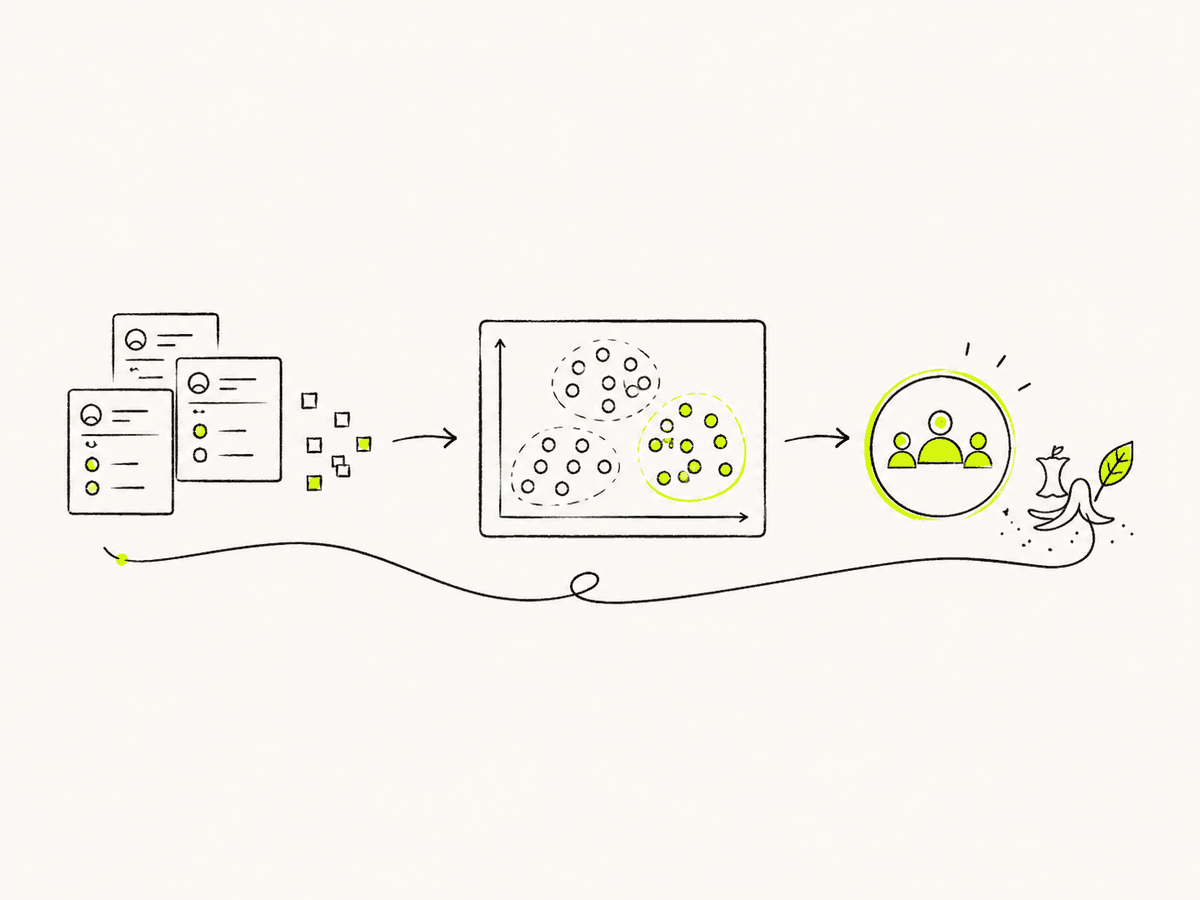
- Clustering to find natural generator profiles, which produced three groups: Undecided (55), Engaged (52), and Latent potential (45).
- Two classification models, one predicting waste destination and one predicting whether someone had attempted reuse.
- Feature importance analysis to identify which survey variables carried real signal.
What the models actually said
The destination model failed — AUC 0.50, no predictive capacity whatsoever. That is a result, not a setback: it says waste destination is driven by external factors like collection infrastructure and access to alternatives, not by anything measurable about the individual. Reporting it honestly matters more than quietly dropping it.
The reuse-attempt model performed moderately: AUC 0.76, 74% accuracy. Reuse behaviour is associated with internal factors — perception, interest, willingness to act — and the most important variable was the respondent's assessed reuse potential.
Outcome
The useful finding came out of combining the two. The analysis identified 18 people with a profile favourable to reuse who had never actually attempted it, and 100% of them said they believed in reuse. That subgroup is the clearest intervention target in the dataset: the belief is already there, so the barrier is something else — and addressing it corresponds to an estimated 6,786 kg of organic waste per year.
The project is open source, documented in Portuguese.